Neck Pain

Following a detailed history and thorough evaluation, your physical therapist will develop goals specifically based on your findings. Theses goals will include returning you to better cervical health and pain free function. In order to best benefit you, the therapist will choose from a number of treatment options such as those listed below.
Modalities:

A variety of state-of-the-art modalities including ultrasound/phonophoresis, low level laser, iontophoresis, and electrical stimulation can be used to assist with pain relief and increased tissue healing.
Manual Therapy:
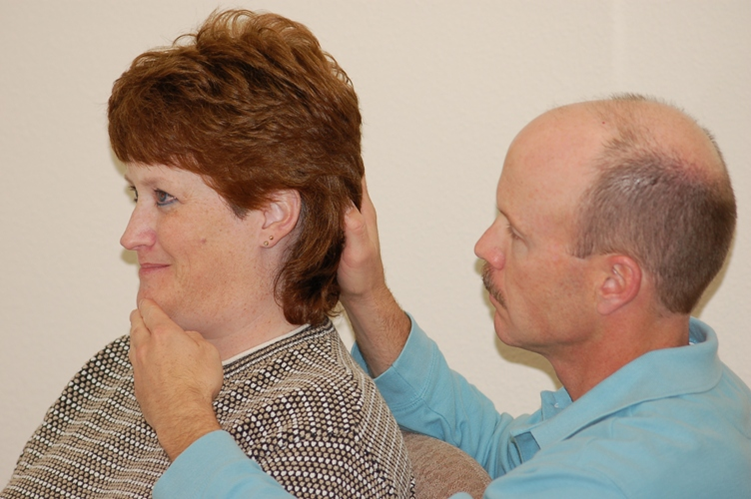
Our therapists utilize a wide variety of manual therapy techniques including massage, soft tissue mobilization, gentle traction, range of motion, manual stretching, deep tissue mobilization, trigger point release and myofacial work. These techniques are utilized to increase joint motion, reduce muscle spasm, increase flexibility, reduce scar tissue, and increase mobility.
Flexibility:
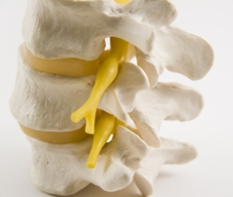
Cervical flexibility is critical for improvement in functional and performance of activities of daily living. Our protocols consist of a flexibility component to increase cervical range of motion.
Strengthening:
Cervical, upper back and arm strength are key factors in preventing and treating neck pain. Appropriate strengthening techniques will be taught in order to develop stability in the region and lessen the likelihood of recurrent pain.
Postural Instruction:
Appropriate standing and sitting posture is important in avoidance of both neck and low back pain. Our physical therapists are trained to evaluate posture and recommend postural correction techniques.
Ergonomics:
Proper workstation placement is key in prevention of work related neck pain. This is especially true for patients who have sedentary jobs with significant periods of sitting before a computer. The staff of AIM Physical Therapy is certified in evaluation of individual work stations. They will be able to make recommendations to ensure proper ergonomics including assessment of the computer terminal as well as placement of the desk and chair. Recommendations can be made regarding use of appropriate lifting techniques and avoidance of repetitive use injuries.
Other Conditions